

Lecture Description
Packaging and labeling are the primary interface for consumers before purchase. As consumers become more focused on quality and more aware of the production processes and ethical implications of their food, there is a rising demand for products with informative labeling.
In the case of specialty coffee, most of the information about green coffee — such as origin, processing methods, altitude, variety, and certifications — is included on retail coffee labels. This practice indicates that roasters are committed to ensuring traceability within their supply chains as a process of coffee decommoditisation. However, information overload, as well as new information, can create consumer confusion and lead to suboptimal decisions.
The lecture will present findings from a series of consumer studies that explored the relative importance of label information on coffee choice, as well as the impact of label information on consumers' sensory expectation and perception of coffee.
Date: Saturday, June 27, 2026
Time: 16:00 - 16:45
Location: Room 1122
Category: Business
Access: This lecture is free to attend with a World of Coffee entry badge. Register to attend World of Coffee here.
Please note that lecture sessions are open on a first-come, first-served basis. Early arrival is highly recommended to secure your seat.
Speaker
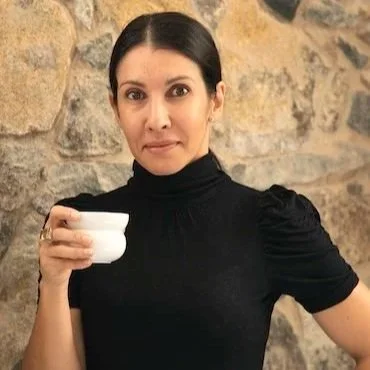
Dr. Fabiana Carvalho
Researcher, University of Campinas / Mió
Fabiana Carvalho is a neuroscientist who received her MSc in Biochemistry and her PhD in Psychobiology. She is currently a collaborating researcher at the University of Campinas, Brazil, and brand director at Mió. Her main research project “The Coffee Sensorium” is focused on understanding multisensory flavour perception and how it impacts the coffee drinking experience and consumption behaviour. She has published several scientific articles showing the effect of coffee cups and packaging on sensory and hedonic judgements of specialty coffee. This research project has several collaborators such as the SCA (Specialty Coffee Association) and Prof Charles Spence (University of Oxford, UK).